Educators around the globe are starting to realise that, given how much our students’ lives are immersed in AI they are needing to learn skills other than those necessary to purely obtain knowledge. Critical, analytical and creative thinking, problem-solving skills, empathy, compassion, and systems thinking are all going to need to be developed or enhanced to a higher degree to allow our students to cope in an ever-changing world.
I have been feeling frustrated over the last couple of years about the lack of depth of my students’ CAS (creativity, activity, service) projects, which is part of the IB Diploma Programme. While the majority of my students are genuinely interested in addressing local or global issues, their projects are often band-aid approaches, for example, a food/clothes/book (insert any other collection item) drive. Of course, these items are welcomed by our community partners but I never really felt that they truly understood the issues they were trying to address.
Enter Compass Education and their sustainability tools. I had seen some of the tools mentioned in various courses and articles that I’d read but never truly understood how to use them until I completed the two-week intensive “Teaching and Learning for a Sustainable World” course during the summer. It was enlightening to finally gain an understanding of what is meant by sustainability and systems thinking. This was a game changer and I couldn’t wait to try out the Sustainability Compass and the Systems Iceberg with my students.
As part of their induction to Year 12, my students attend a simulation about poverty called “Struggle for Survival” run by Hong Kong-based NGO, Crossroads Foundation, who work to help those in need across the globe. The experience forces students to face the desperation that millions go through on a daily basis just to keep their families alive, while at the same time battling with their own values and beliefs.
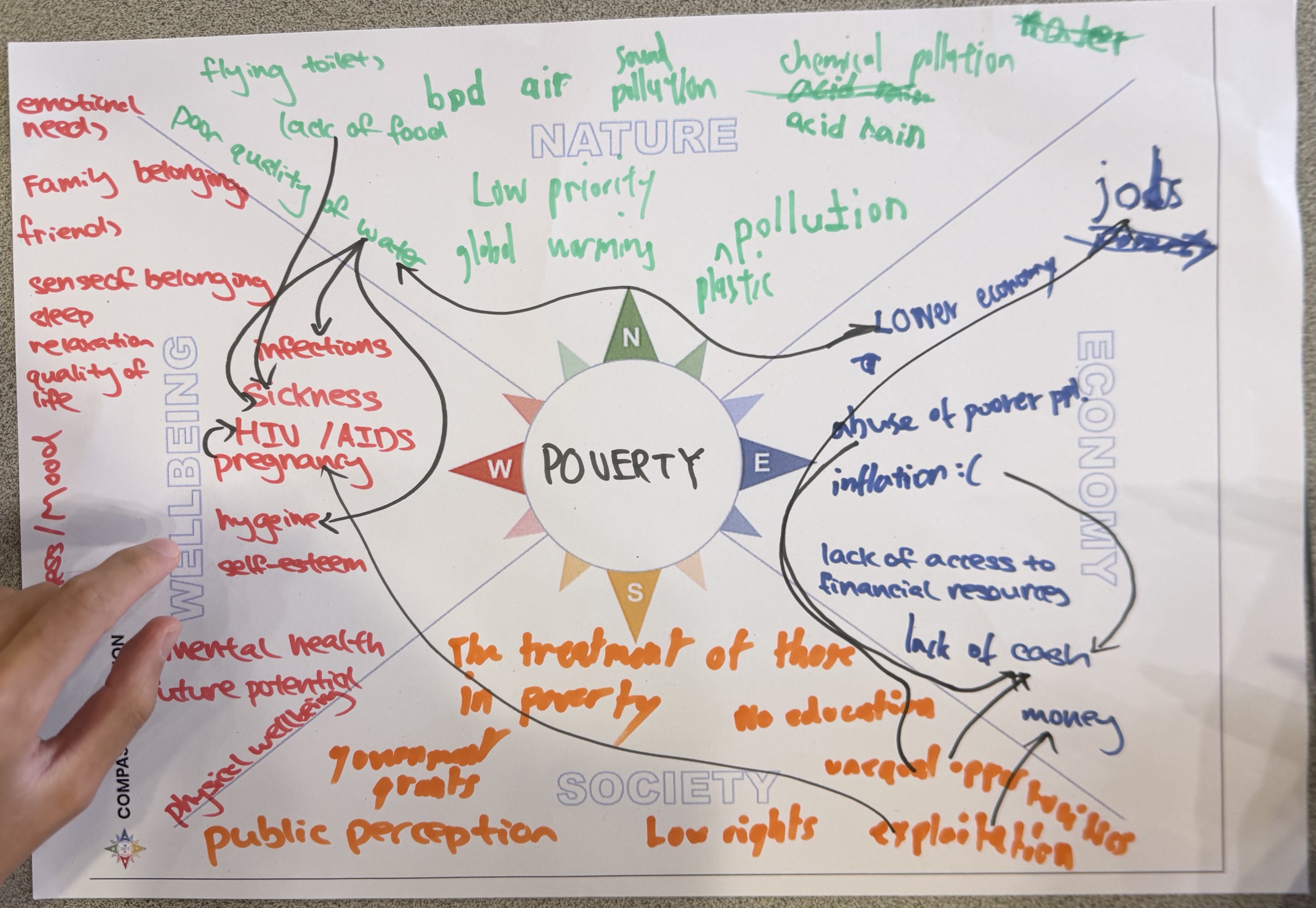
I was really excited to use the Sustainability Compass and the Systems Iceberg with the Year 12 students but knew that they would need some training with the tools before letting them loose on their own. Given that the Crossroads experience was common to all of them, I used the Sustainability Compass and Systems Iceberg as reflection tools about their “experience” of poverty. As a side note, you may see references to “flying toilets” and “air hugs” in the attached examples. These are unique terms used as part of the simulation.
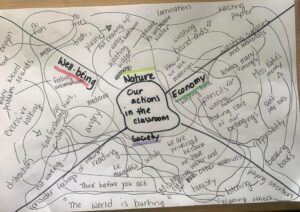
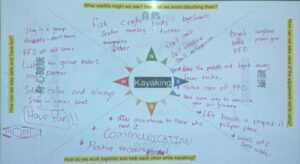
As a whole year group, they completed a guided session on the Sustainability Compass. While a small group of students boldly rated their knowledge of poverty before even going to the simulation or using the tools as ten out of ten, the majority of students stated that they gained a holistic view of the many factors that are related to poverty and how they are interconnected. In their groups of four, it was interesting to see all members contributing because one person may have had an interest in business and economics while another may have known more about environmental factors and so on.
When the students were required to consider the environmental, economical, societal and wellbeing elements of poverty, they very quickly realised the interconnectedness within the elements and between them. This meant when the students were asked to start drawing the arrows that indicated cause and effect, it came quite naturally to them. The students were so engaged that I had to force some of them to stop as it was the end of the lesson. My advice would be to allow an extended period of time if possible because it is very easy to continue to take the conversations as deep as you like.
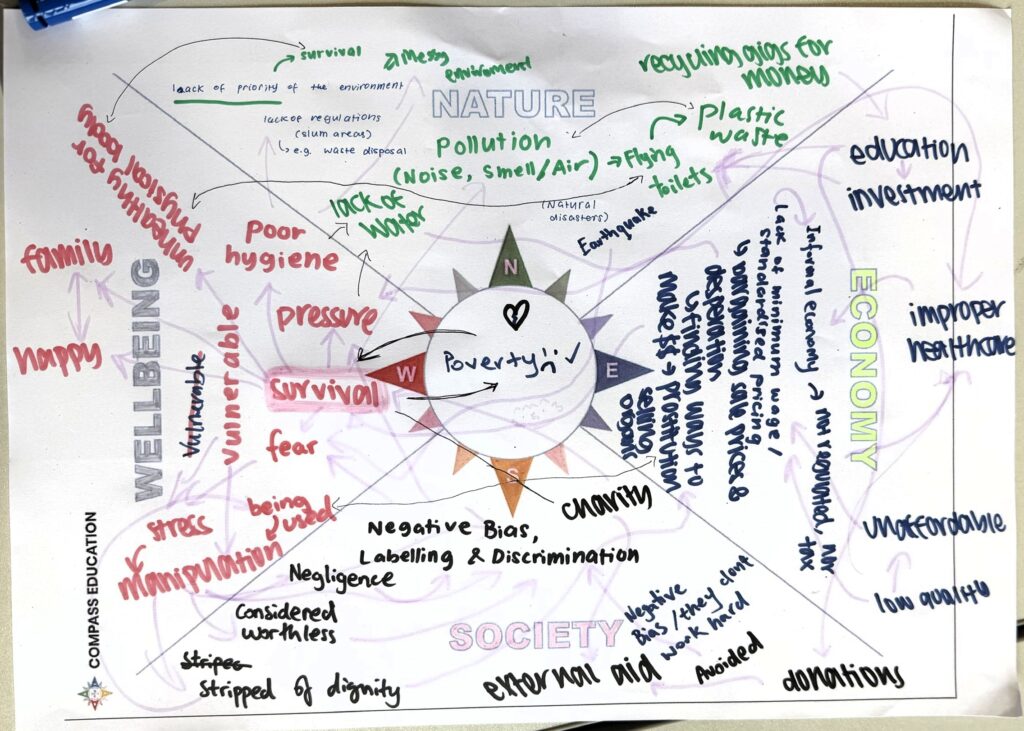
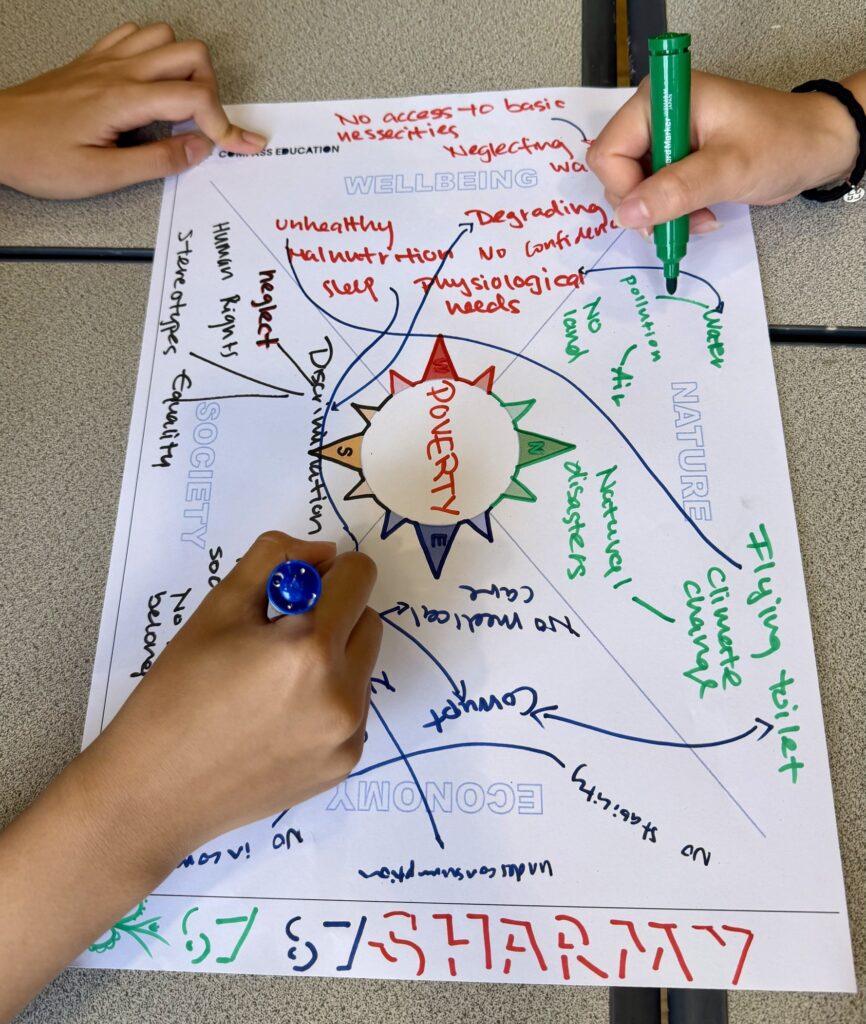
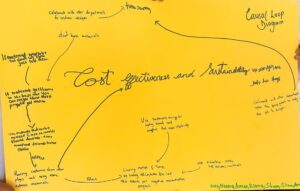
In my second session with the Year 12 students, I asked them to take one or more factors from their Sustainability Compass and use this as an impetus for their Systems Iceberg. While the Sustainability Compass provides an excellent overview of a topic, the Systems Iceberg allows students to deep dive into an issue to really dig into the root causes, and then find leverage points that are accessible to them. Hence, hopefully eradicating the band-aid service projects and developing more long-term and sustainable projects with community partners.
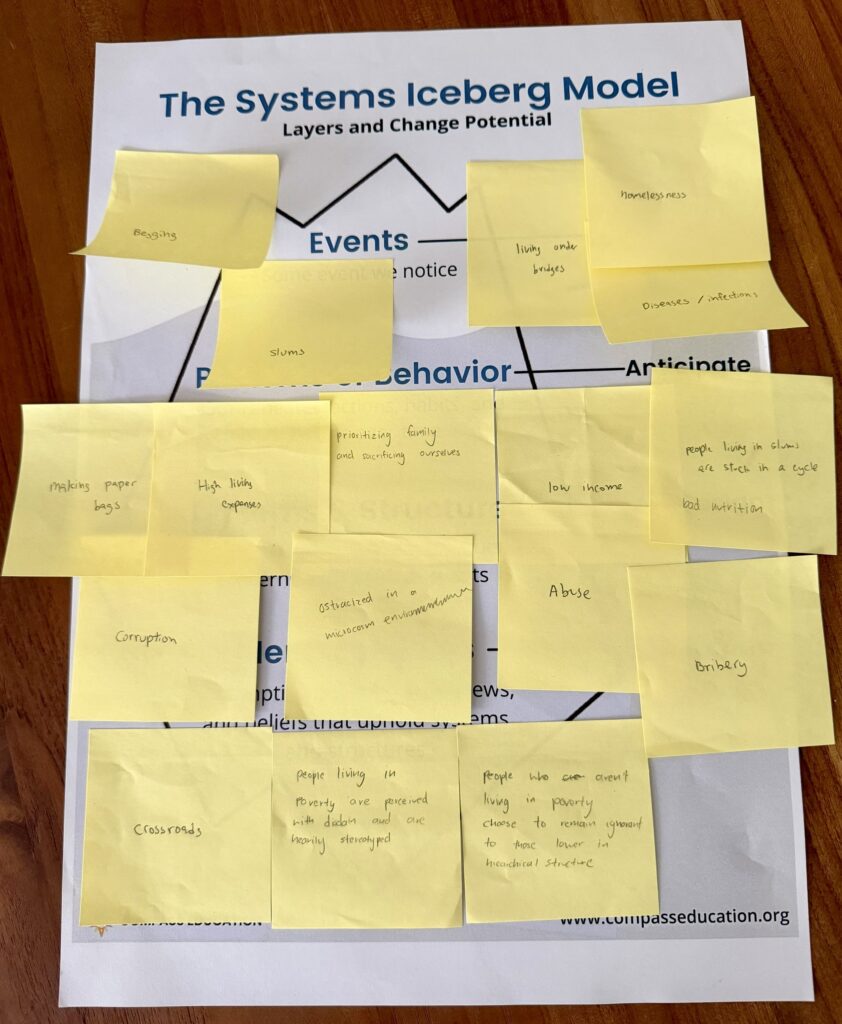
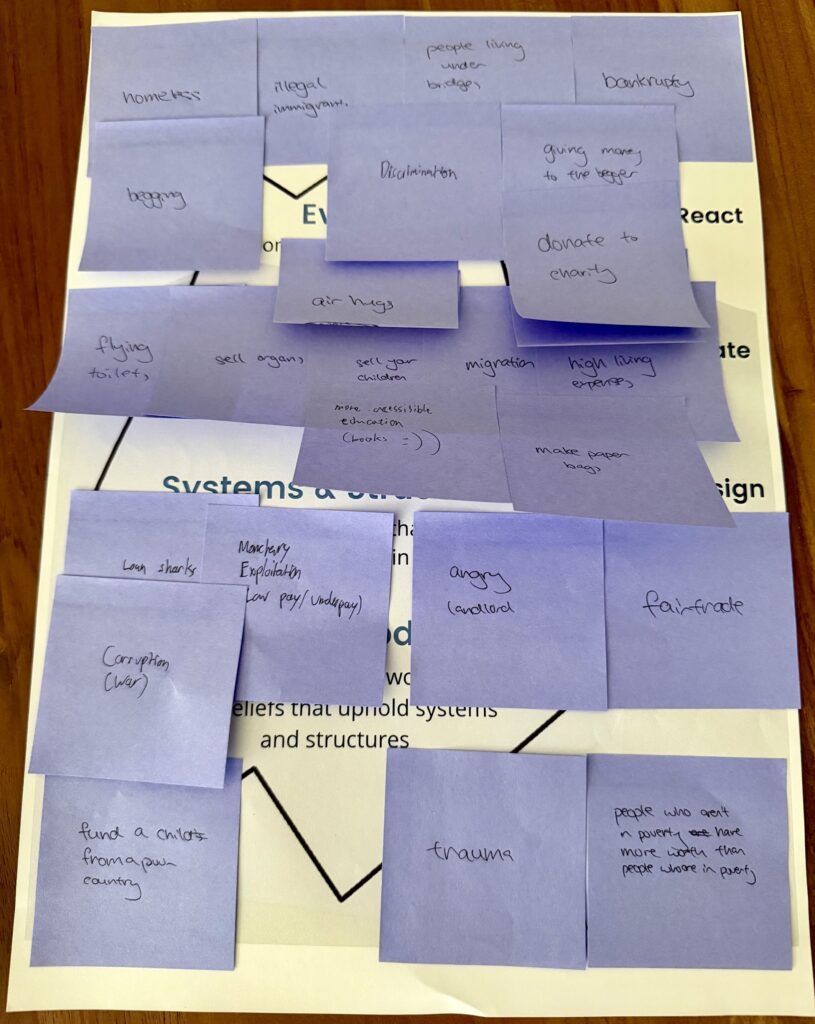
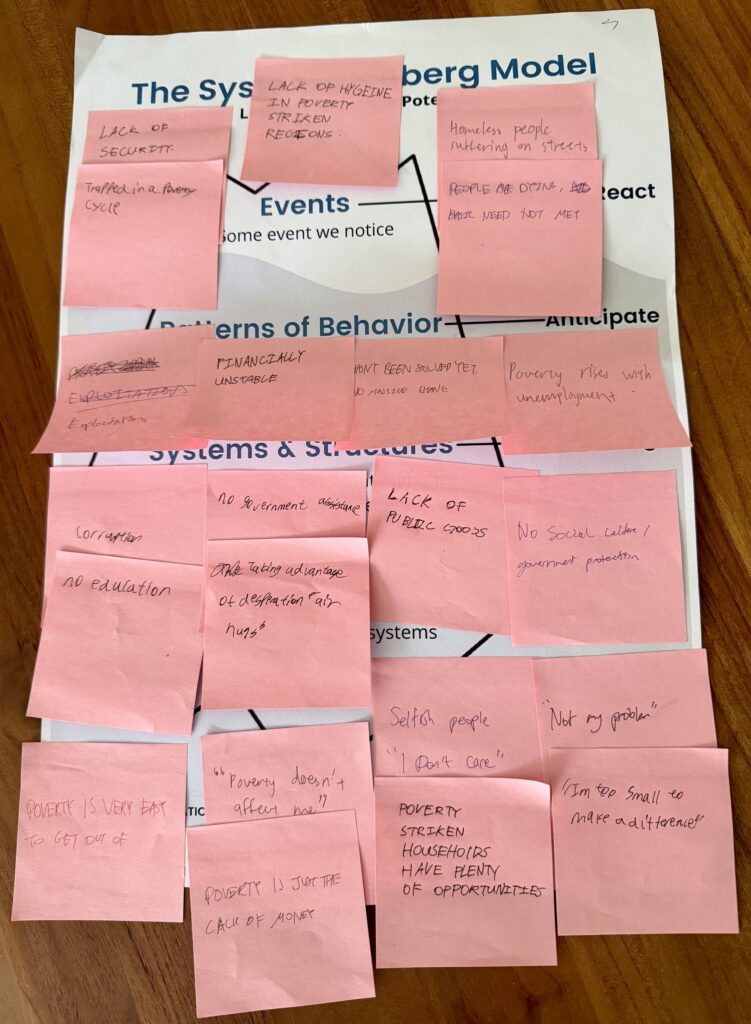
The Systems Iceberg was definitely more challenging for the students but with a little guidance and group sharing of ideas, they were able to complete the Systems Iceberg successfully. Compass Education’s videos on the Sustainability Compass and the Systems Iceberg provided excellent examples for the students. They realised that while they can’t always make systemic changes at every level, there are definitely more meaningful ways in which to make a difference.
Now that the students have had some exposure to the Sustainability Compass, the Systems Iceberg and systems thinking in general, they are ready to use them on their own. The students’ next steps will be to complete a Sustainability Compass and a Systems Iceberg as part of the investigation process for their CAS project. Please be assured that you don’t need to be teaching the IB Programme to use these systems thinking tools, they work for any age group and any curriculum. In fact, they don’t even need to be part of a particular curriculum. One of my colleagues who was helping supervise the students was completing the Sustainability Compass in her head about where to retire! The systems thinking tools really can be used for any scenario. I am excited to see the improved quality of the students’ ideas for their projects in the coming weeks and am looking forward to finding other opportunities in which to use these tools.
Author

Michelle O’Dea
As a passionate educator, as CAS Coordinator and Mathematics teacher, I believe deeply in the power of service learning to bridge the gap between classroom theory and real-world problem-solving. Dedicated to cultivating critical thinking, empathy, collaboration, and communication skills in my students, I integrate systems thinking tools to help learners navigate complex problems. By mapping interconnected factors, students gain a holistic view of local and global challenges, uncover root causes, and identify high-leverage intervention points. This systems approach empowers young people to move beyond superficial volunteering and build meaningful, long-term, reciprocal partnerships with community members to address authentic needs.