
THE SYSTEMS ICEBERG
Introduction to the Sustainability Toolkit
What is it?
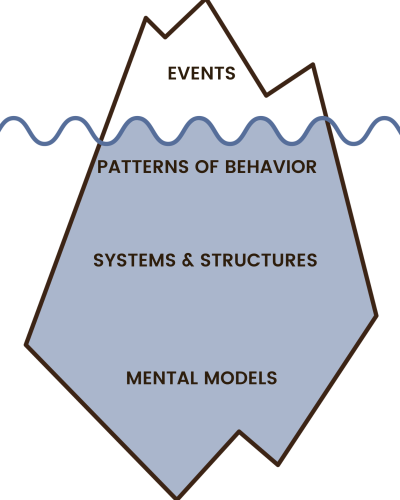
The Systems Iceberg is a diagnostic tool that helps individuals and groups look beneath the surface of daily events. Most of our world is hidden from view; by diving deeper, we can move from simply reacting to problems to transforming the underlying structures and mental models that create them. This method is essential for identifying “leverage points”, or the places within a system where a small shift can lead to a large, lasting change.
Why use the iceberg?
01 - Move Beyond Reacting
Most people spend their time responding to "Events" (the tip of the iceberg). This tool shifts the focus toward the root causes that drive those events.
02 - Identify Leverage Points
It helps you find the most effective places to intervene in a system, ensuring that your solutions are long-term rather than temporary fixes.
03 - Surface Hidden Assumptions
By reaching the level of "Mental Models," teams can uncover the deep-seated beliefs and values that keep a system stuck in its current state.
How do I use the systems iceberg?
To ensure the Systems Iceberg is used effectively, follow the PATH—a simple four-step process to move from a basic topic to deep, systemic insight.
- Identify a single, recent event or a recurring problem that caught your attention
- Example: A high school’s sudden spike in student absenteeism this month
- Look back over time. Has this happened before? Are there seasonal trends?
- Note the history of the event to see if it is part of a larger pattern of behavior
- Supporting Structures: Ask what is “allowing” this to happen. Look at rules, physical layouts, resource distribution, or power dynamics
- Mental Models: Identify the beliefs, values, and assumptions held by the people in the system. What do we believe to be true that keeps this structure in place?
- Step back and review the entire iceberg. Where is the most powerful place to intervene?
- Often, changing a “Mental Model” or a “Structure” provides much higher leverage than simply reacting to the next “Event.”
What will you need?
Large chart paper or a whiteboard, multi-colored sticky notes, and markers.
The “Systems Iceberg Worksheet” (Vertical layout with four tiers).
A list of “Generative Questions” to help prompt deeper thinking at the Mental Models level.
This works well with:
Try using this tool with others Compass uses in the classroom!