Living in a city like Dubai gives educators and parents a multitude of access points to spark meaningful conversations about sustainability. From luxury brands and fast cars to high-end hotels, entertainment parks, and the magic of building a city in the middle of the desert, everywhere you look, there’s an opportunity to ask, what’s the cost to people and the planet?
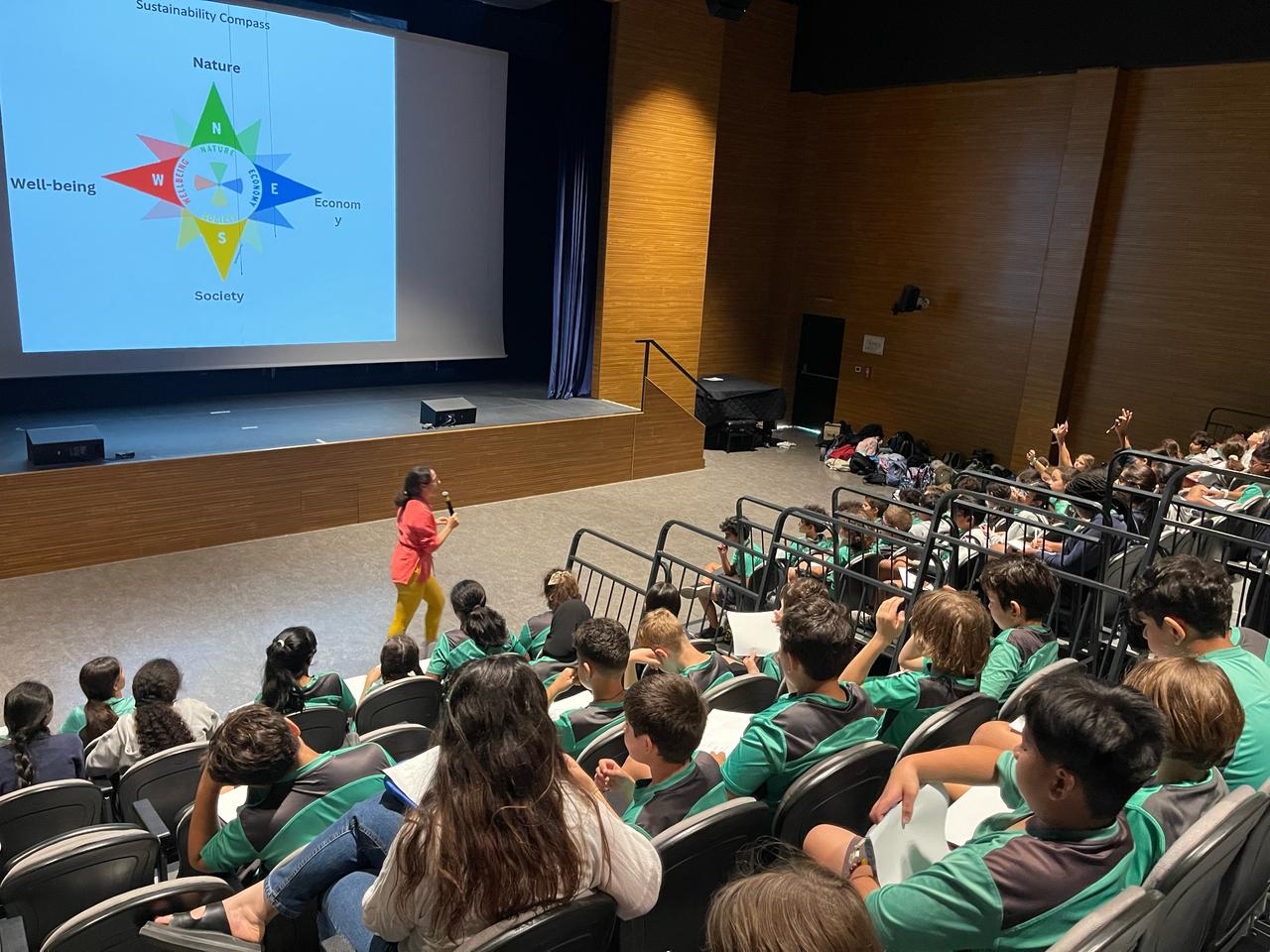
When I introduced the Sustainability Compass to a group of Grade 5 students, I never expected just how deeply they would connect their everyday choices to some of the world’s most complex challenges.
We began by reading from my book, Cyril’s Kindness Crew: Ending Poverty, Feeding the World. Our discussions revolved around what “sustainable” really means when we talk about solving problems. There was a moment of silence, then eyes widened as the classic proverb landed: “If you give someone a fish, you feed them for a day. If you teach them to fish, you feed them for a lifetime.” It was in that moment that the idea of long-term impact clicked.
Then I used what I call my “Dubai hook”:
“I bet you all love your brands—Nike? Adidas?”
Cue the big smiles and nods of agreement.
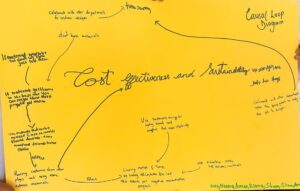
What started as a simple question, “Where was your t-shirt made?”, unfolded into a rich systems-thinking journey. Using the Sustainability Compass, students explored how fast fashion is connected to food security. The connections they uncovered, between cotton farming, water scarcity, factory working conditions, and food prices were insights many adults haven’t even made.
We began with something familiar: the labels on their clothing. As students discovered “Made in Bangladesh,” “India,” or “China” on their shirts, their questions flooding in.
- “Why do we grow cotton instead of food?”
- “Why are clothes so cheap?”
- “Who makes our t-shirts?”
We began to explore the four pillars of food security: access, availability, utilization, and stability, but this wasn’t a lecture. This was an investigation. And the students were the detectives.
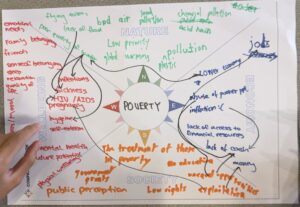
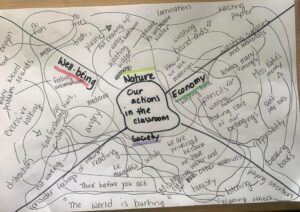
With the Brújula de sostenibilidad, students mapped the environmental, economic, social, and well-being impacts of t-shirt production.
- Naturaleza: Massive water use for cotton, pesticide-laden fields, and polluted waterways.
- Economía: Cotton vs. food crop profitability, fast fashion economics.
- Sociedad: Factory labor conditions, farmland access, and cultural views on clothing.
- Bienestar: Health risks from chemicals, stress from food insecurity, and basic human needs.
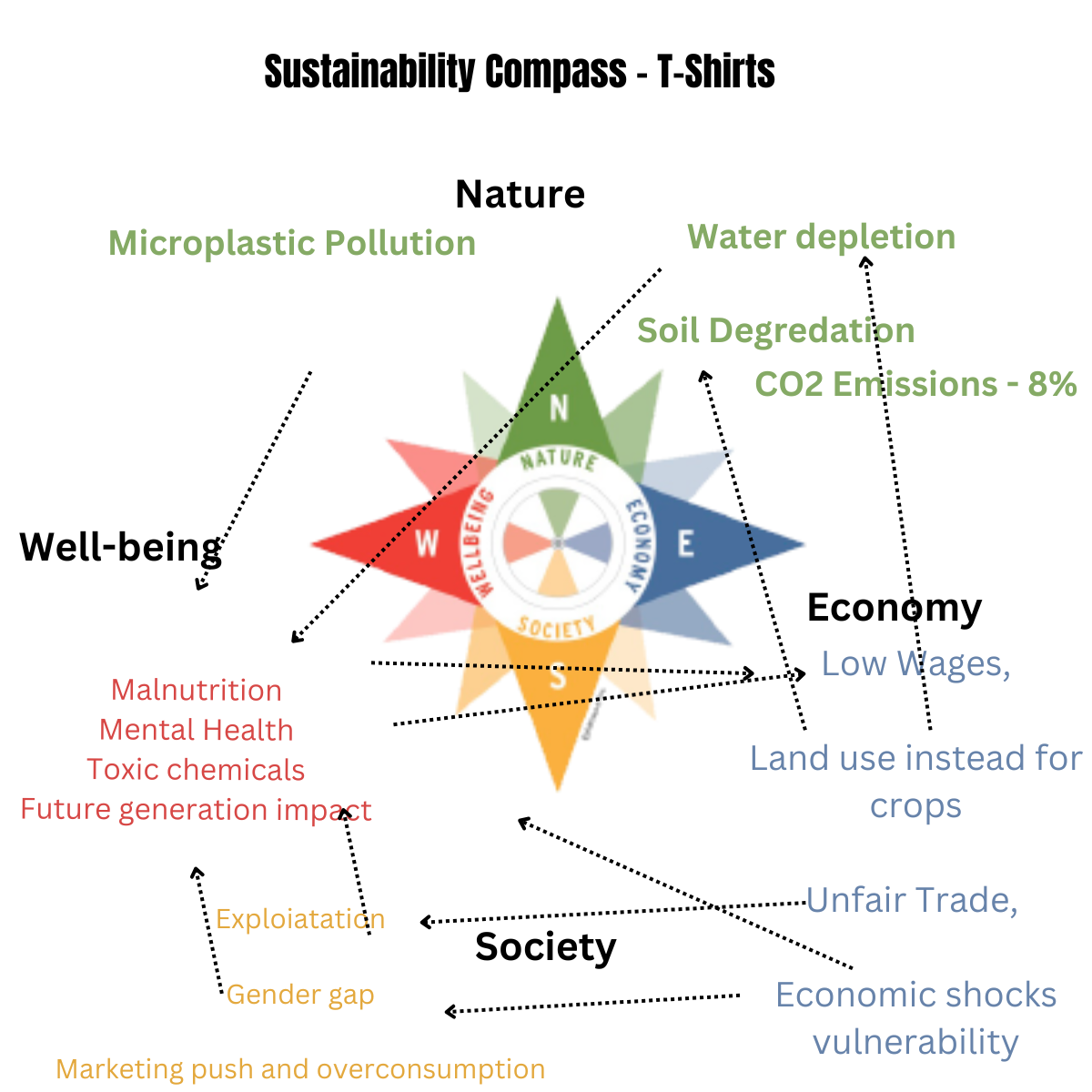
One student said, “I never thought the land used for my t-shirt could have grown someone’s food.”
It was a quiet moment of realization.
Another student was amazed at the hope that boycotting brands that do not align with their values can make a difference.
As we circled back to the 17 Sustainable Development Goals, a new layer of clarity emerged. What began as a conversation about food and fashion led us to Goal 16: Peace, Justice and Strong Institutions.
Justice, fair treatment of workers, equitable access to land and water, ethical business practices, was no longer abstract. Even the t-shirt on their backs was part of a justice story.
This was systems thinking clicking into place, not as theory, but as lived understanding.
As a facilitator, I was profoundly moved. Watching a 10-year-old make the connection between their shirt and someone else’s empty plate is not something you forget.
I saw students go from:
- “Why are we doing this?” to “How can we help?”
- “This is just how it is,” to “What if we changed it?”
My hope is that they realized they are not powerless. Their choices, what they buy, what they say, what they do, shape the world.