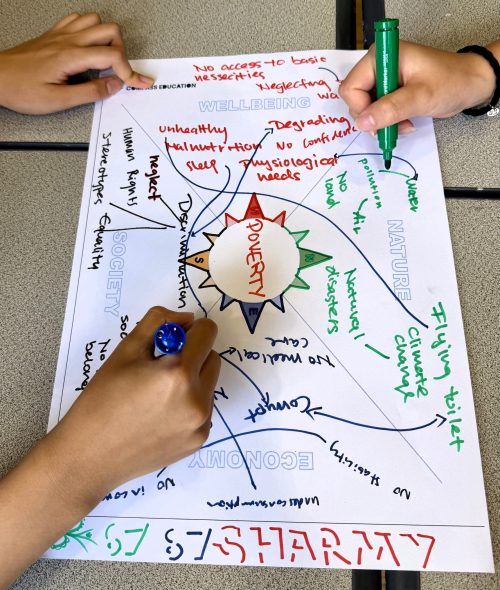
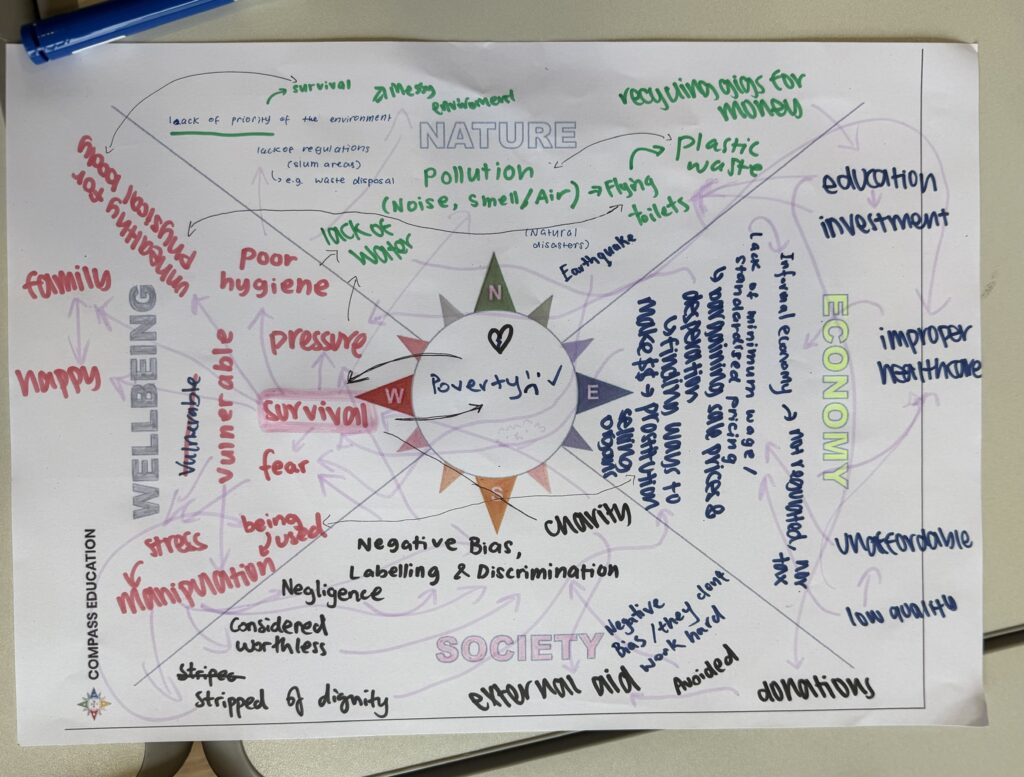
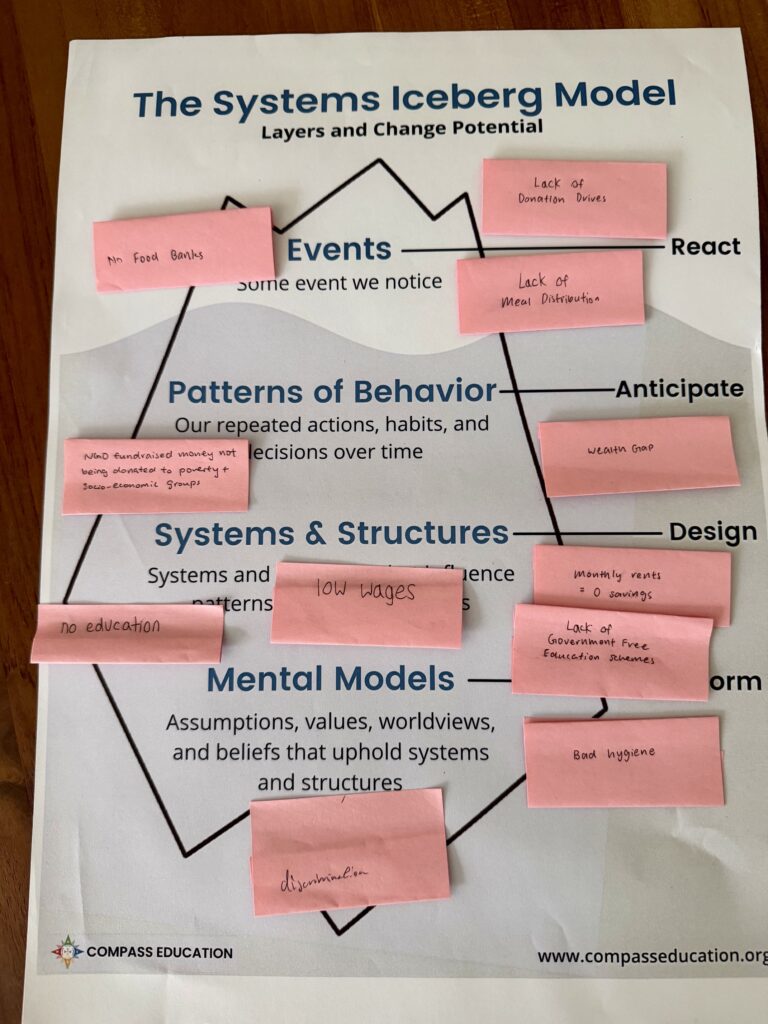
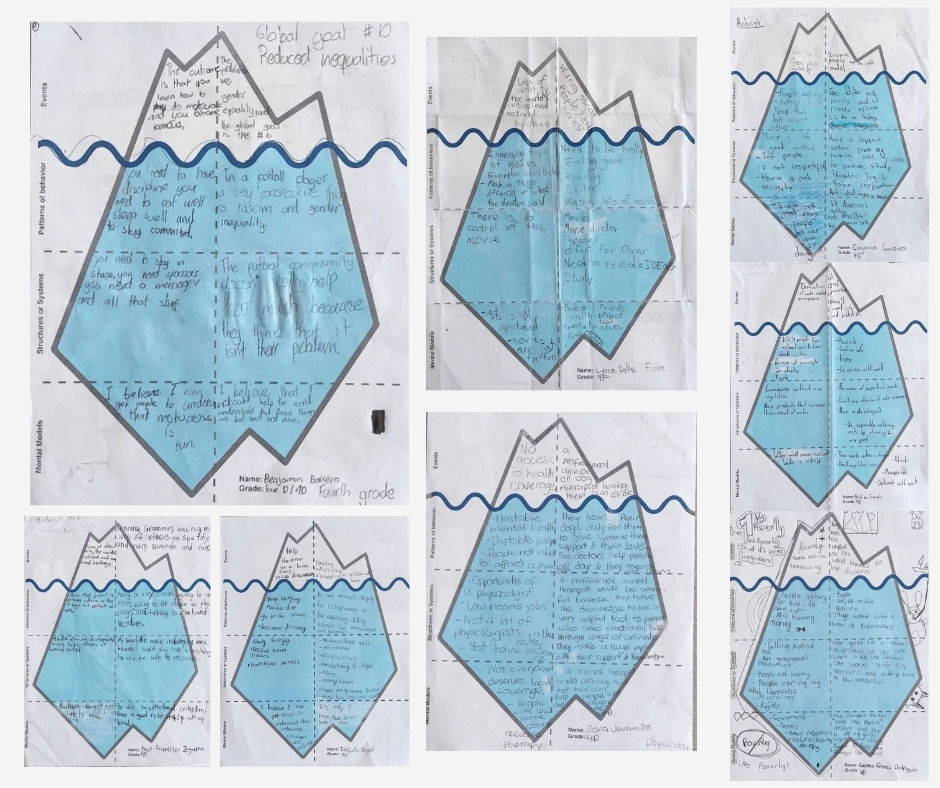
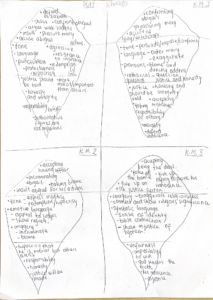
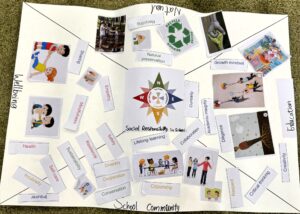
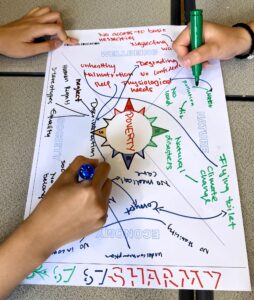
Students will use the Sustainability Compass to identify the different aspects of poverty they encountered or have knowledge of in order to gain a holistic view of poverty as well as recognising the interconnectedness of these factors. In the second lesson they will then use the Systems Iceberg to dig deeper to examine the root causes of poverty and identify leverage points that could be used to make change.
Impact on Learning
Students were engaged during both lessons and there were plenty of fruitful conversations taking place. On average, students rated their knowledge of the issue of poverty as 6.3 before going to Crossroads and doing the Sustainability Compass and the Systems Iceberg. After completing the Sustainability Compass they rated their knowledge as 7.775 and 7.8125 after the Systems Iceberg. I was happy with this perceived improvement given the limited time I had with the students to complete the activities and the fact that some students were overly confident when rating their knowledge of poverty as 10/10 even before participating in the simulation or completing the Sustainability Compass and Systems Iceberg.
¿Utilizó este plan de lección? Comparta sus pensamientos con la comunidad de Compass.
Brújula Educación
Apoyamos a maestros inspirados, administradores innovadores y educadores de todo tipo para maximizar su capacidad de generar un impacto positivo y un cambio sostenible en los estudiantes, las escuelas y los equipos.